
Criminal Court Cases in Mississippi County
Mississippi County criminal court records split at the court level. Arkansas Circuit Court is the trial court for felony matters. The Mississippi County Circuit Clerk serves as clerk of the criminal and juvenile courts, prepares dockets, and maintains orders and judgments. District courts take many traffic offenses, misdemeanors, and city ordinance violations. A search aimed only at the circuit docket can miss a lower-court file.
Circuit work is divided between Blytheville and Osceola. Local district divisions keep their own lower-court matters. Begin with the charge level and filing court, not the arrest location alone. A city arrest may produce a district case, a circuit case, or no filed public case.
Mississippi County's Two Clerk Districts
The Circuit Clerk maintains contacts in both county seats. The Blytheville District uses P.O. Box 1498, Blytheville, AR 72316, and 870-762-2332. The Osceola District uses P.O. Box 466, Osceola, AR 72370, and 870-563-6471. Both list weekday hours from 9:00 a.m. to 4:30 p.m. Call the district tied to the filing when an online entry needs confirmation.
The county department contact page shows why a location check matters.
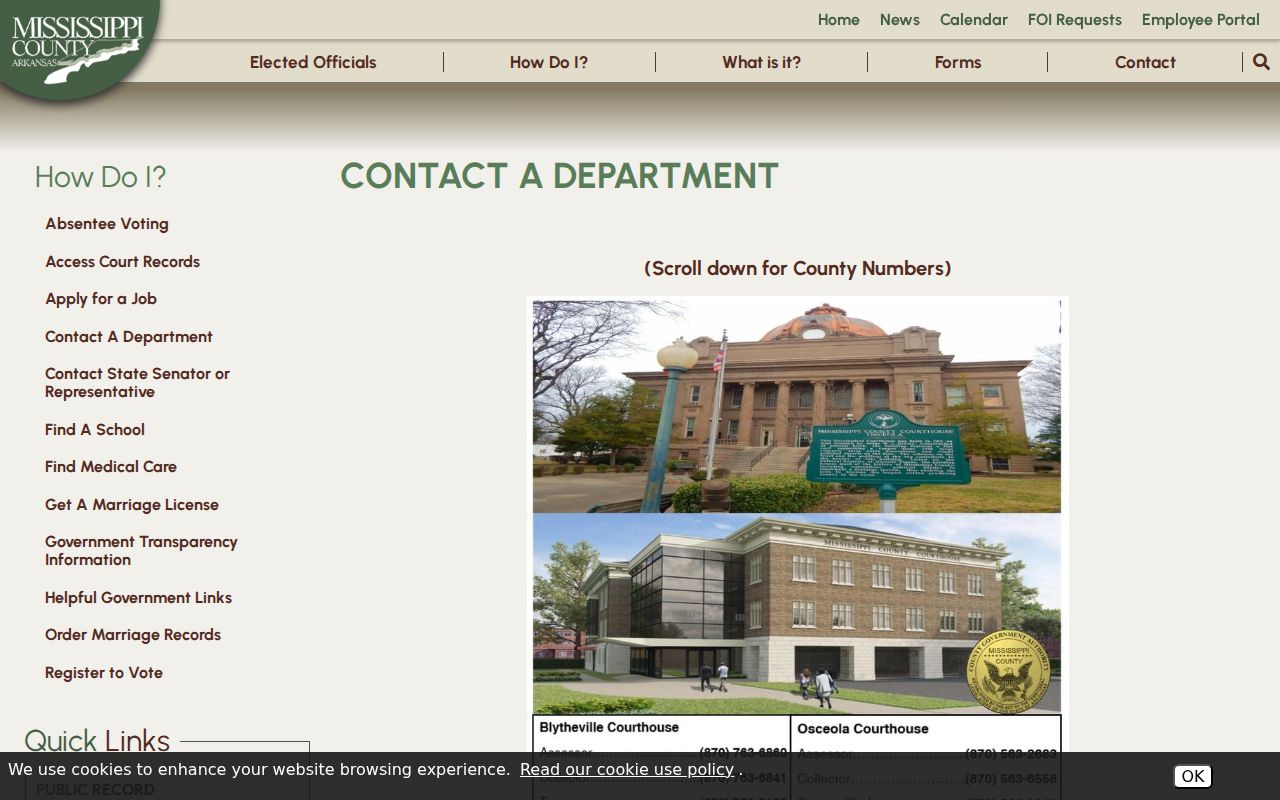
The clerk does not accept filings or handle communications by email, and staff cannot give legal advice. A phone call or visit is the practical fallback.
Mississippi County Case Record Searches
The county Access Court Records page routes users to Search ARCourts, also called CourtConnect. It is the main remote channel for public Mississippi County Circuit Court records. Search by the participant or case route shown by the interface, then use filing court and case type to distinguish similar results.
- Open the county Access Court Records page and follow its circuit-records link.
- Choose the participant or case-number route offered by Search ARCourts.
- Confirm the court, filing date, and case type before relying on a result.
- Read docket events, charges, hearings, and disposition together.
- Contact the proper clerk district for missing, certified, or paper documents.
| Field Label | Type | Required | Notes |
|---|---|---|---|
| Search by Participants | Search route | No | Visible starting option on the public interface. |
| Case number | Identifier | No | Use when a notice supplies the exact number. |
| Court | Result detail | No | Separates circuit and district matters. |
| Case type | Result detail | No | Distinguishes criminal from other files. |
| Filing date | Result detail | No | Helps separate similar results. |
Search ARCourts Mississippi County Cases
The Arkansas Judiciary CourtConnect page explains the state search channel and directs case-specific questions back to the filing court.
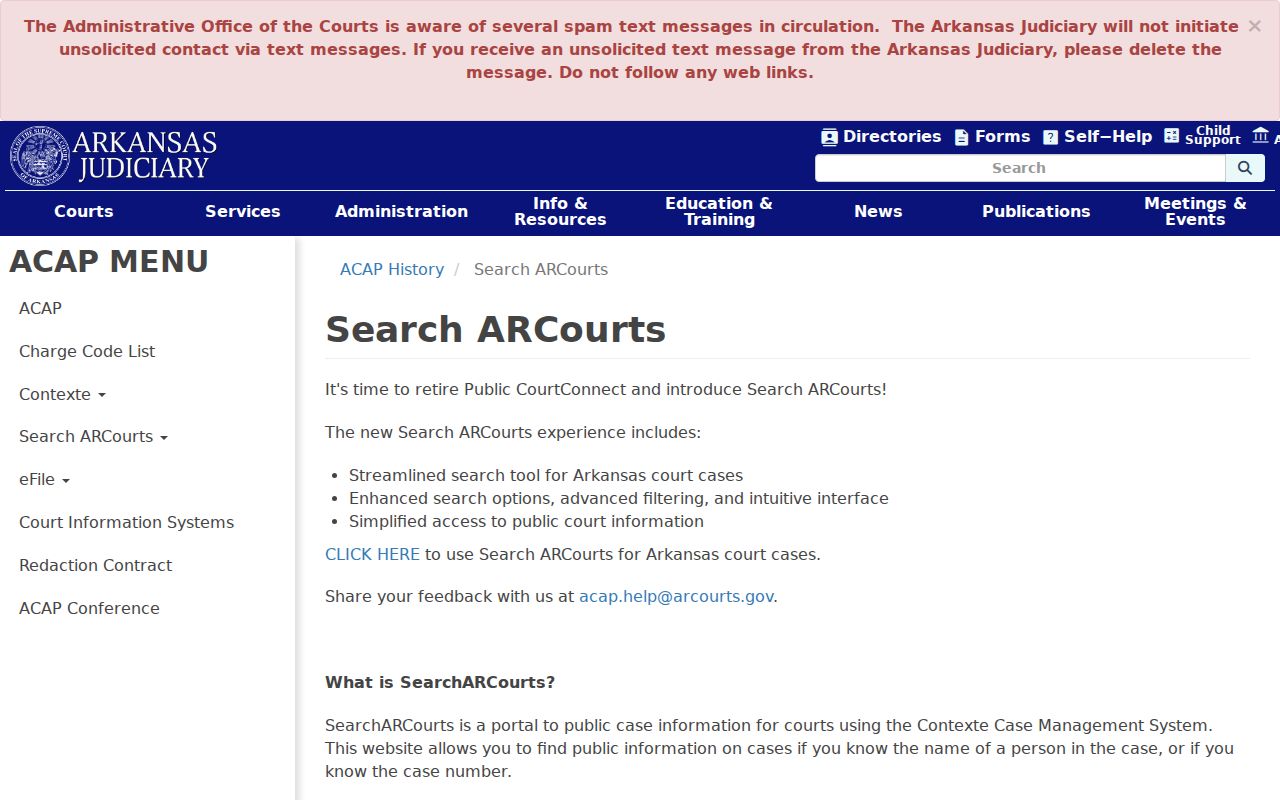
Search ARCourts provides a public index and docket view. Mississippi County clerks control the underlying local file. A filing may appear after the jail booking. If a result seems incomplete, save the case number and call the named court instead of guessing from an arrest entry.
What a Criminal Case File Contains
A Mississippi County case file documents what prosecutors filed and what the court did. It may include a charging instrument, motions, hearing entries, pleas, orders, judgment, and sentence. A docket is the event list, not the complete set of filed papers. Read the charge and disposition together. A filed charge can later be amended or dismissed, and the final judgment controls the outcome.
Several fields help prevent a false match. Confirm the Mississippi County court, case number, filing date, and party role before reading the charge. Next, follow events in date order. A hearing entry shows that an event was set or held, but it may not state the result. A disposition records how a charge ended. The judgment and sentence supply the final court action after guilt, when applicable. Financial assessments or document links may also appear, though the public interface may redact protected data or omit the filed image.
| Case Number & Court | Identifies the file and Mississippi County court. |
|---|---|
| Charging Document | States the allegations formally filed by the prosecutor. |
| Docket Entries | Lists filings, hearings, rulings, and events by date. |
| Hearing Dates | Shows scheduled or completed appearances when public. |
| Disposition & Judgment | Records dismissal, plea, verdict, or final resolution. |
| Sentence & Conditions | States punishment and court terms after guilt. |
Mississippi County District Court Records
Not every criminal matter belongs in Circuit Court. Arkansas district courts commonly handle traffic offenses, misdemeanors, and city ordinance violations. The Arkansas Judiciary district-court directory lists Mississippi County divisions and contacts.
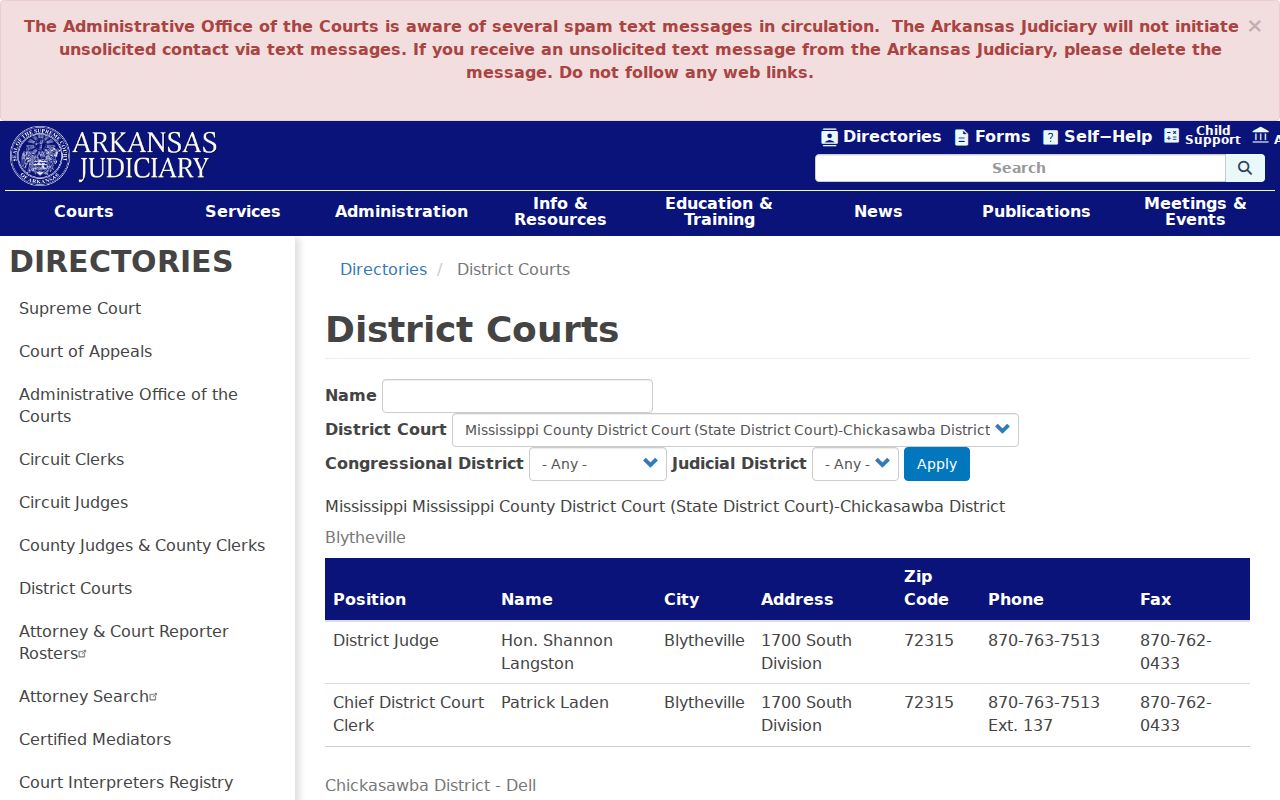
Osceola District Court says it handles traffic violations, misdemeanors, and city ordinances. Manila lists a court clerk. When the circuit search finds nothing, ask whether the matter stayed in the local district division.
Criminal Case Stages in Mississippi County
A court file begins when charges are filed, not merely when an arrest occurs. At arraignment, the court addresses the charge and plea. Pretrial events can include motions, scheduling, and negotiations. A case may end through dismissal, a plea, or trial. If guilt is established, judgment and sentencing follow. Each step leaves a different docket entry, so one early event rarely tells the full story.
Case flow: Charges Filed › Arraignment › Pretrial › Plea or Trial › Disposition › Sentencing
Mississippi County Prosecutors and Case Files
Prosecutors handle state charges, but they are not the public-copy counter for a court case. The county lists prosecutors in Blytheville and Osceola, plus the Mississippi County Public Defender. Filed pleadings and rulings still become part of the clerk's case record.
The official attorney directory identifies those offices.
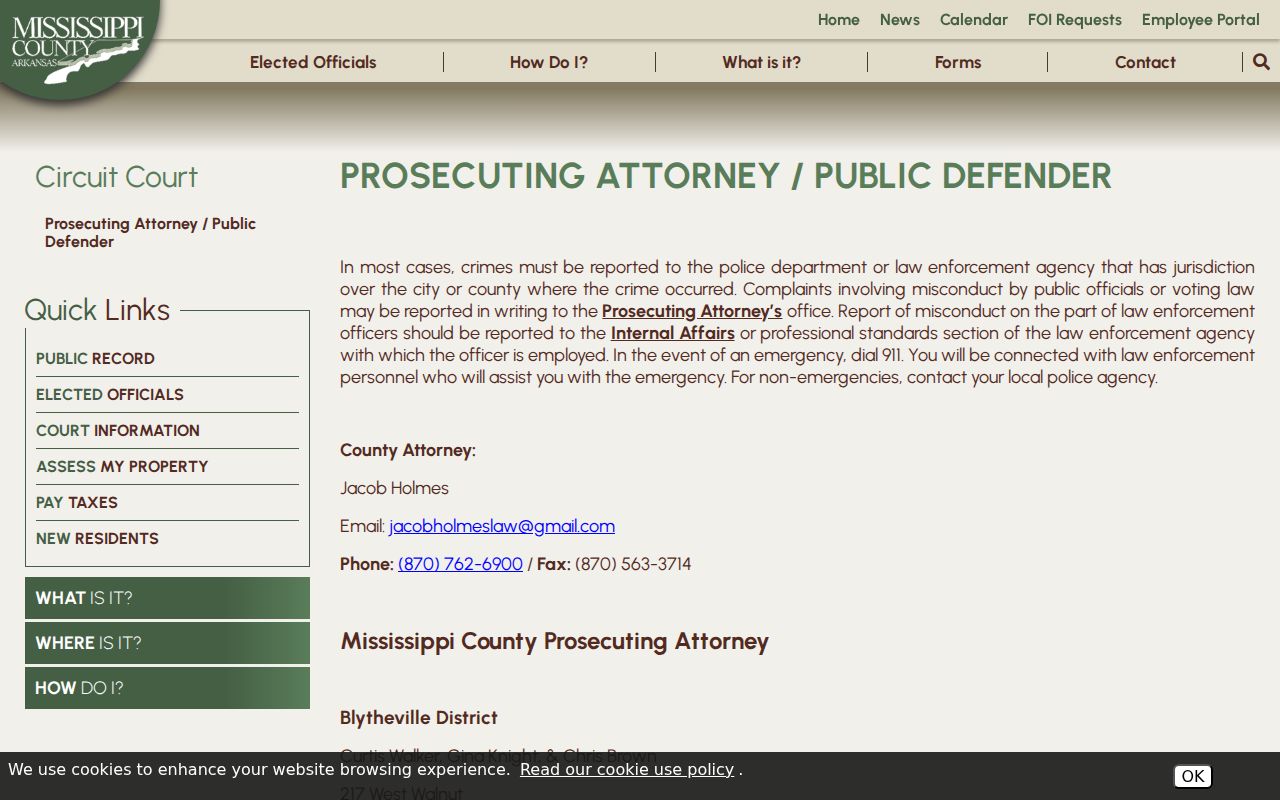
Use these contacts for their legal roles, not as substitutes for the Circuit Clerk. The clerk maintains the docket, judgment, and filed documents.
Mississippi County Court Email Limits
The Circuit Clerk states that the office accepts no filing by email and handles no form of communication by email. That rule affects both active cases and record follow-up. Sending a pleading, copy request, or case question to an assumed email address does not place it in the file and does not start a formal request.
Use Search ARCourts for the initial public check. Then call the Blytheville or Osceola district shown on the record. Be ready with the exact case number, party name, approximate filing year, court, and document title. If staff says a written or in-person request is required, follow that office's stated process. Clerk staff may identify available records and procedures, but they cannot interpret an order, predict a result, or advise how to respond in a pending Mississippi County criminal case.
This rule also prevents a common mix-up. The statewide portal is a viewing channel, while the filing court is the custodian. Technical questions about Search ARCourts can go to the Arkansas Judiciary support route. Questions about a particular docket entry, copy, or judgment belong with the Mississippi County court named in the result.
Lower-court routing needs the same care. The Chickasawba or Blytheville district listing, Osceola District Court, and Manila court clerk serve matters that may never enter the circuit link used by the county page. Ask the arresting agency or read the citation for the named court when the filing level is unclear. That small check can prevent a fruitless search at the wrong Mississippi County office.
Access Rules for Case Records
Arkansas court records are generally open unless law or court order restricts access. Juvenile matters, sealed cases, and protected personal information may be withheld or redacted. Online access can be narrower than the courthouse file. A missing result does not prove that no case exists.
The county's Access Court Records page is the official local route into the system.
If Search ARCourts does not display the needed file, contact the correct clerk district. Ask what is public, whether copies are available, and whether another court holds it.
Sealing changes access but does not mean a user should improvise around the restriction. Arkansas uses petitions and orders to seal for many adult records. Once an order applies, public-facing systems and local access can change on different schedules. A person reviewing their own Mississippi County record should keep the signed order and contact the filing clerk if a public docket still shows information that should be restricted. The Arkansas Crime Information Center reports a separate update process after receiving an order, so a court file and state criminal-history response may not change at the same moment.