
Mississippi County Criminal History Checks
No single search returns every Mississippi County criminal record. Begin with the event you need to confirm. Filed charges and outcomes belong in Search ARCourts and the clerk's file. A new arrest may appear first on the sheriff's roster. The police or sheriff keeps the incident report, while Arkansas State Police keeps the controlled state criminal-history product. Names, approximate dates, the arresting agency, and the likely court district help narrow the route.
The county Access Court Records page points to the state court system. The county's official site shows that handoff rather than running its own case database.
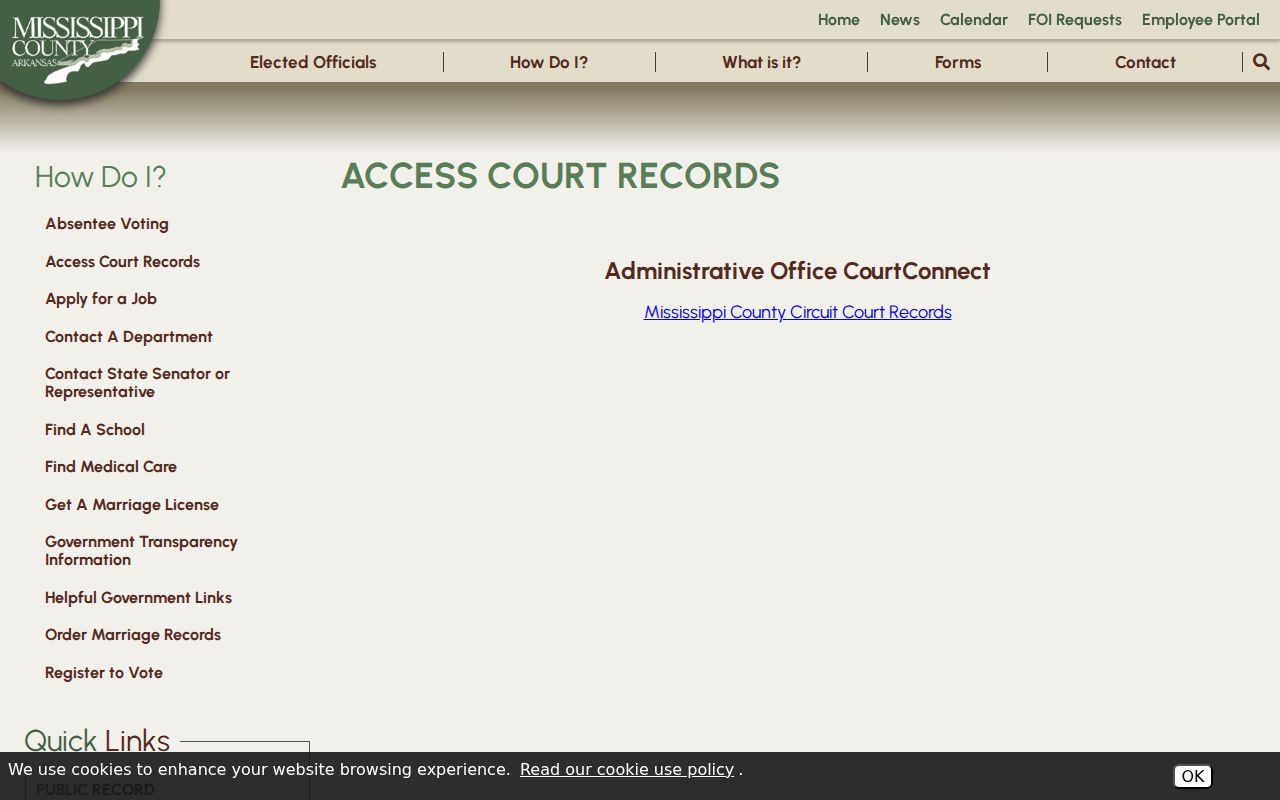
That screen is the county-approved doorway to public circuit court case information.
- Search the court system for filed cases and dispositions.
- Check the sheriff roster when the arrest or release is recent.
- Ask the arresting agency for its incident or arrest report.
- Call the correct clerk district if the public court result is missing or unclear.
- Use Arkansas State Police only when an official state repository check is the right product.
Three Mississippi County Record Sources
Local geography shapes the search. Court records are split between clerk operations tied to Blytheville and Osceola. Jail intake and booking questions go to Luxora. A report written by Blytheville, Osceola, or Manila police stays with that city department even when the person is later held in the county jail. This split explains why one name may yield a police report, a jail entry, and a case file with different dates and fields.
| Starting point | Best for | Official route |
|---|---|---|
| Circuit or district court | Filed charges, docket events, disposition | Search ARCourts, then the filing clerk |
| Sheriff in Luxora | Booking, custody, bond, sheriff reports | Roster, FOIA form, phone, or counter |
| City police | Original city incident or arrest report | The department that wrote the report |
The Mississippi County government site presents both courthouse contacts and the main county offices.
Its office links help separate court, county, and sheriff record requests.
That separation also helps when two official sources seem to disagree. A jail record can show the charge used at intake before a prosecutor files a court charge. A city report can contain event facts that do not appear in the short roster entry. The court docket may then show a new case number, amended counts, and the eventual result. Read the date and custodian on each Mississippi County record before trying to merge the facts. For a fresh event, move in time order from police report to booking, then from booking to the filed court case. For an older event, start with the court outcome and work back only when the underlying report is needed.
Official Background Checks in Arkansas
The Arkansas Online Criminal Background Check System is an official Arkansas State Police product, not a free public people search. The portal requires a Tyler Arkansas account and signed written consent from the subject. It lists a $22 Arkansas name-based request and an $11 volunteer request. A mail-in ASP-122 individual record check costs $25. The official instructions say not to send cash.
The portal's account screen makes those access limits plain before a user can submit a check.
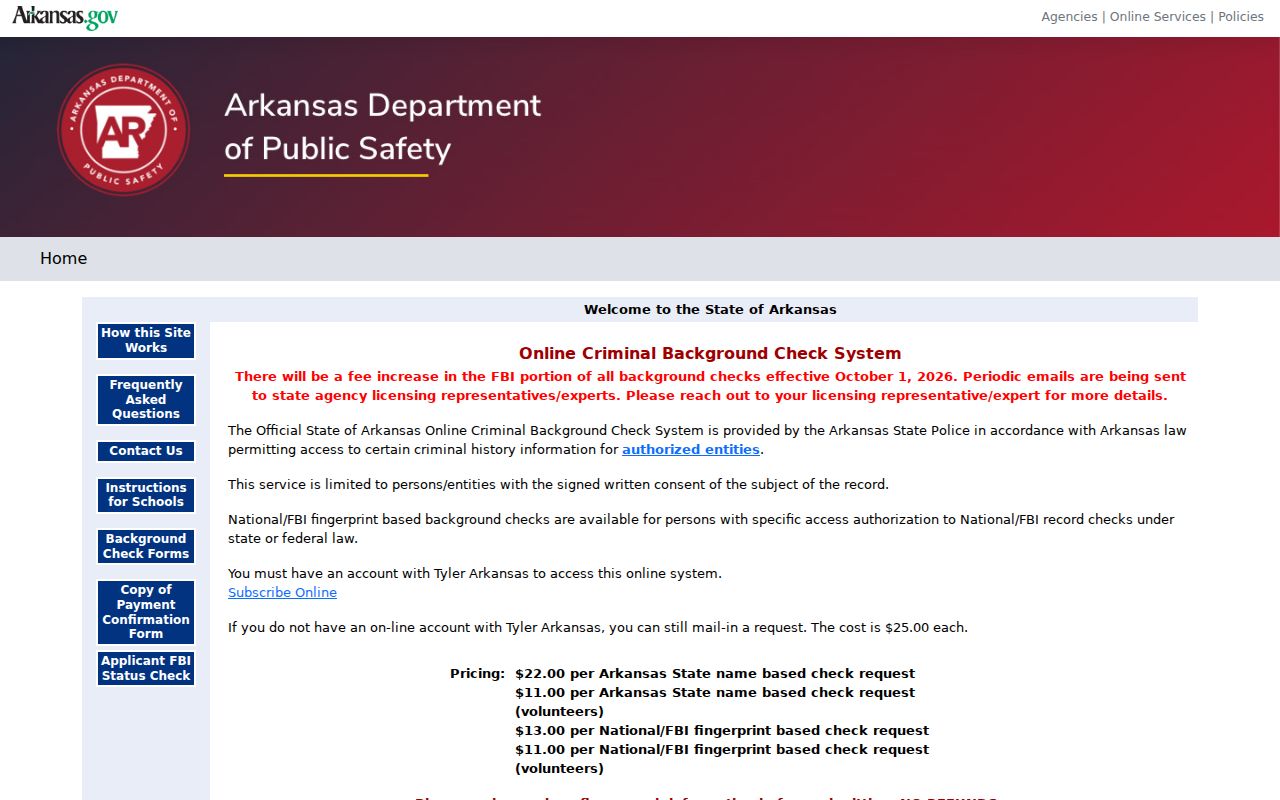
A county court search and a state repository check are different products with different rules.
| Service | Fee | Key rule |
|---|---|---|
| Arkansas online name check | $22 | Account and signed consent |
| Online volunteer check | $11 | Official qualifying route |
| ASP-122 mail request | $25 | Check or money order, no cash |
| Sheriff in-house check | $5 | Only records with that agency |
Mississippi County Court Search Limits
Search ARCourts, also known through CourtConnect, is the free public court route. It begins with a participant search and supports public case browsing. It does not become a statewide rap sheet just because the same name appears. A case result is tied to a filing, court, and docket. The filing court remains the authority for case-specific questions or a record that does not display online.
The public interface shows the statewide search starting point used by Mississippi County.
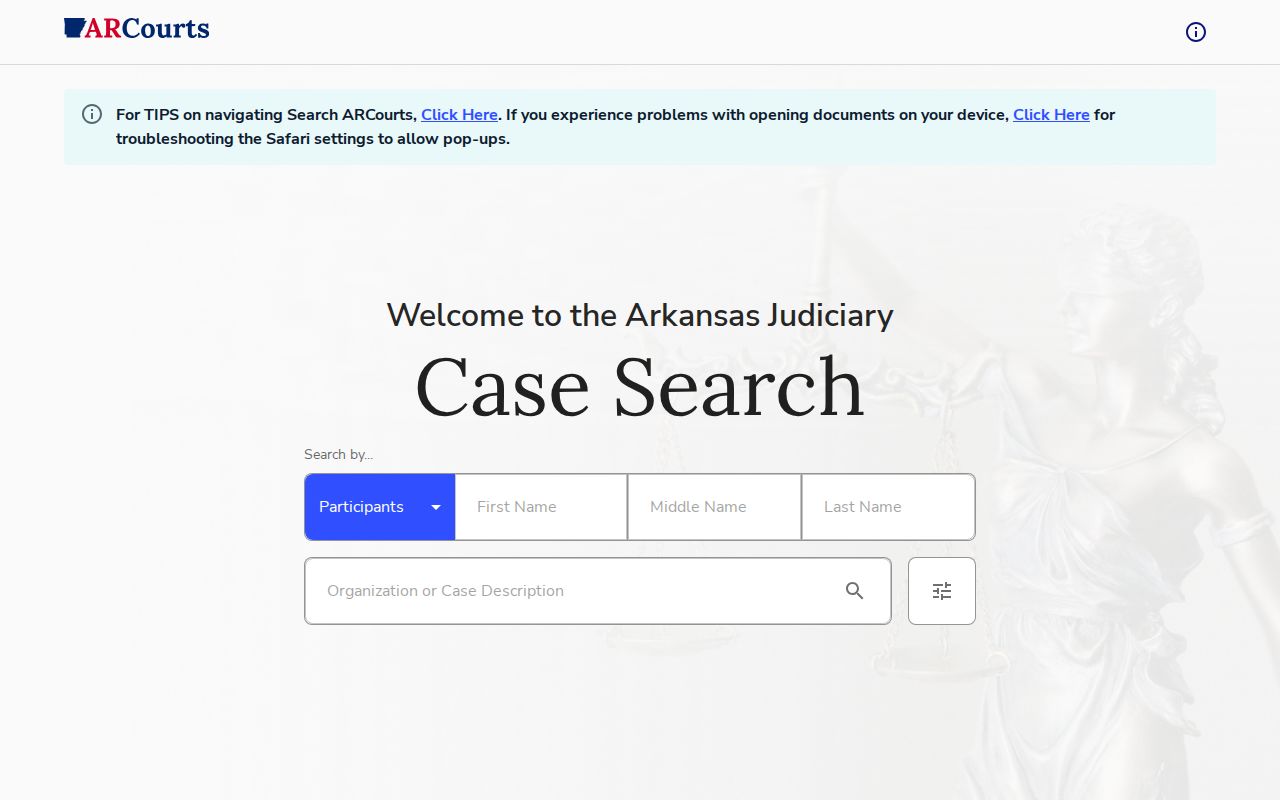
Match the court and case number before drawing a conclusion from a similar name.
| Visible control | Use | Limit |
|---|---|---|
| Participants search | Start with a party name | Exact required inputs may vary |
| County or court filter | Narrow a statewide result | Not every lower-court matter follows one route |
| Tips and document help | Open navigation guidance | Call the filing court for case facts |
Kinds of Mississippi County Criminal Records
Each record marks a different point in the justice process. Police and deputies create incident and arrest reports. Jail staff create a booking file. Prosecutors and courts create the case docket and final disposition. Arkansas State Police receives reportable identity and disposition data for the state repository. The Arkansas Department of Corrections maintains state prison and community-supervision tools.
- Arrest and booking records: custody facts and allegations, not proof of guilt.
- Court case files: filed charges, hearings, docket events, outcomes, and sentence information.
- Police reports: the arresting or reporting agency's account of an event.
- Warrant records: court-issued process that may surface in a docket or later booking.
- Supervision and registry records: distinct state systems with their own publication rules.
Juvenile and sealed files do not follow normal adult public-access rules. A missing public result may reflect a restriction rather than the absence of all agency records.
Mississippi County Jail Roster Fields
The sheriff's roster chooser separates current inmates from people released during the prior 48 hours. That short release window can help when a recent name has left the current list. It is still a custody tool. Charges and bail can change after court, and detention staff direct callers to confirm current amounts, charges, and case numbers.
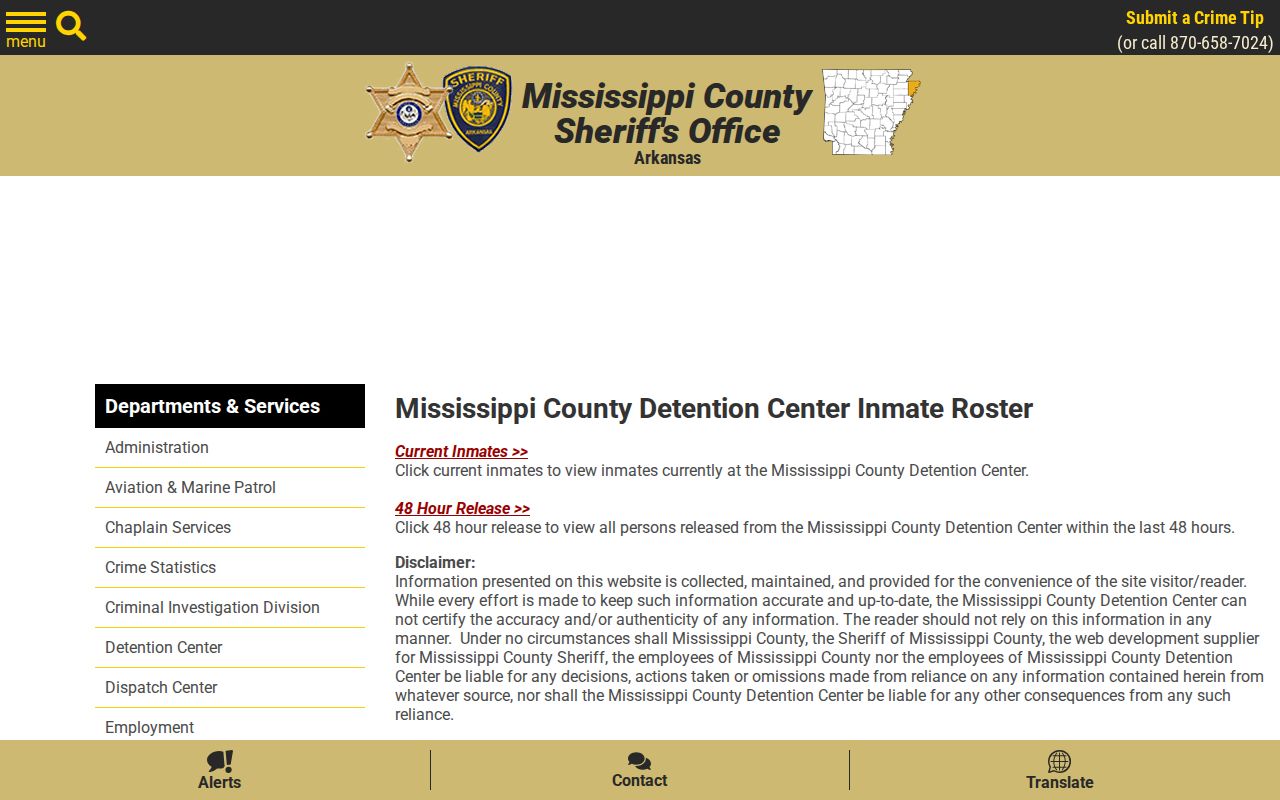
The chooser makes the current-versus-released distinction before the results list opens.
The current inmate roster offers name search, current and released filters, date sorting, and profile pages.
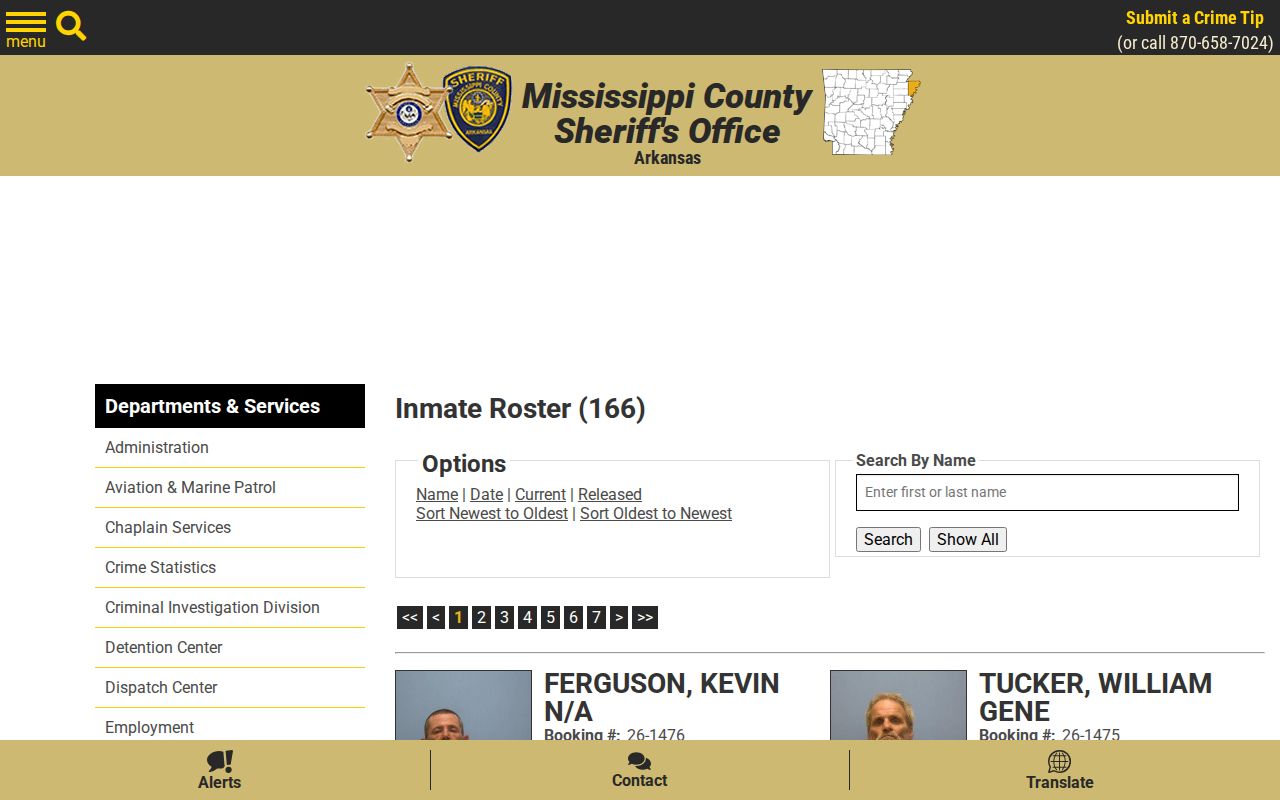
A profile may show the booking number and date, arresting agency, listed charges, bond, and original court date. Those fields describe the booking stage.
Mississippi County Records: What They Contain
A useful reading starts by naming the source. A booking record is custody-based. A court record is case-based. A repository product is identity-based and controlled by Arkansas State Police rules. The same event may look different across all three because charges can change, a prosecutor may decline a count, or the court may enter a later disposition.
| Name and identifiers | Name and party details appropriate to the source; state checks use controlled identity matching. |
|---|---|
| Arrest and booking | Booking number, date, arresting agency, custody status, listed charge, and bond when shown. |
| Court charge | Case number, court, filed charge, docket events, and public documents when available. |
| Disposition | The court's outcome for a charge, such as conviction, dismissal, or acquittal. |
| Sentence | Custody, fine, restitution, probation, or other terms entered by the court. |
| Supervision | State prison or community-correction status when the proper DOC tool publishes it. |
Note: A booking charge may differ from the charge later filed or resolved in court.
Mississippi County Sheriff Record Requests
The Mississippi County Sheriff's Office combines several records channels rather than labeling one stand-alone records division.
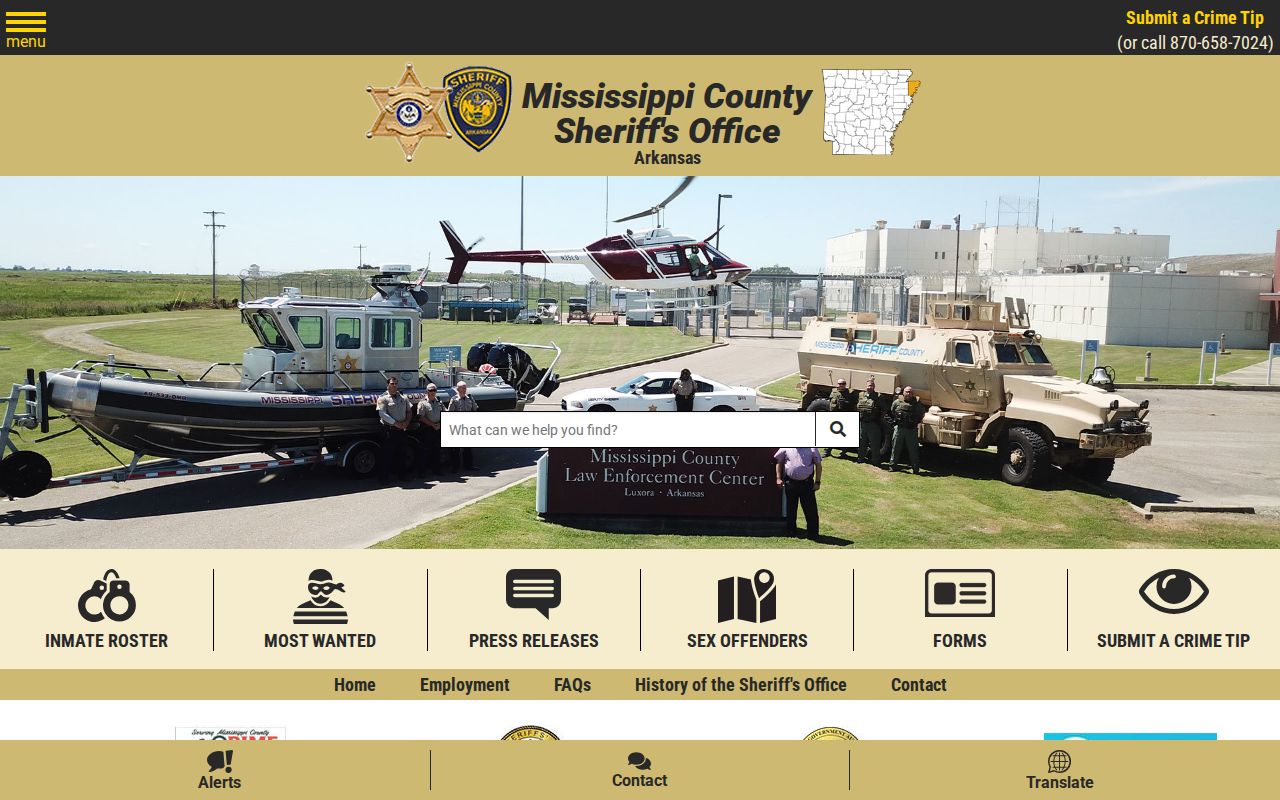
Its Forms, FOIA, incident report, FAQ, detention, and roster pages serve different needs.
For a copy request, the sheriff's FOIA form asks for enough detail to locate the record. Include dates, times, names, locations, and other known facts. Staff notify the requester of costs before fulfillment and monitor requests during administrative hours. The county also offers a broader contact form with an FOI Request choice.
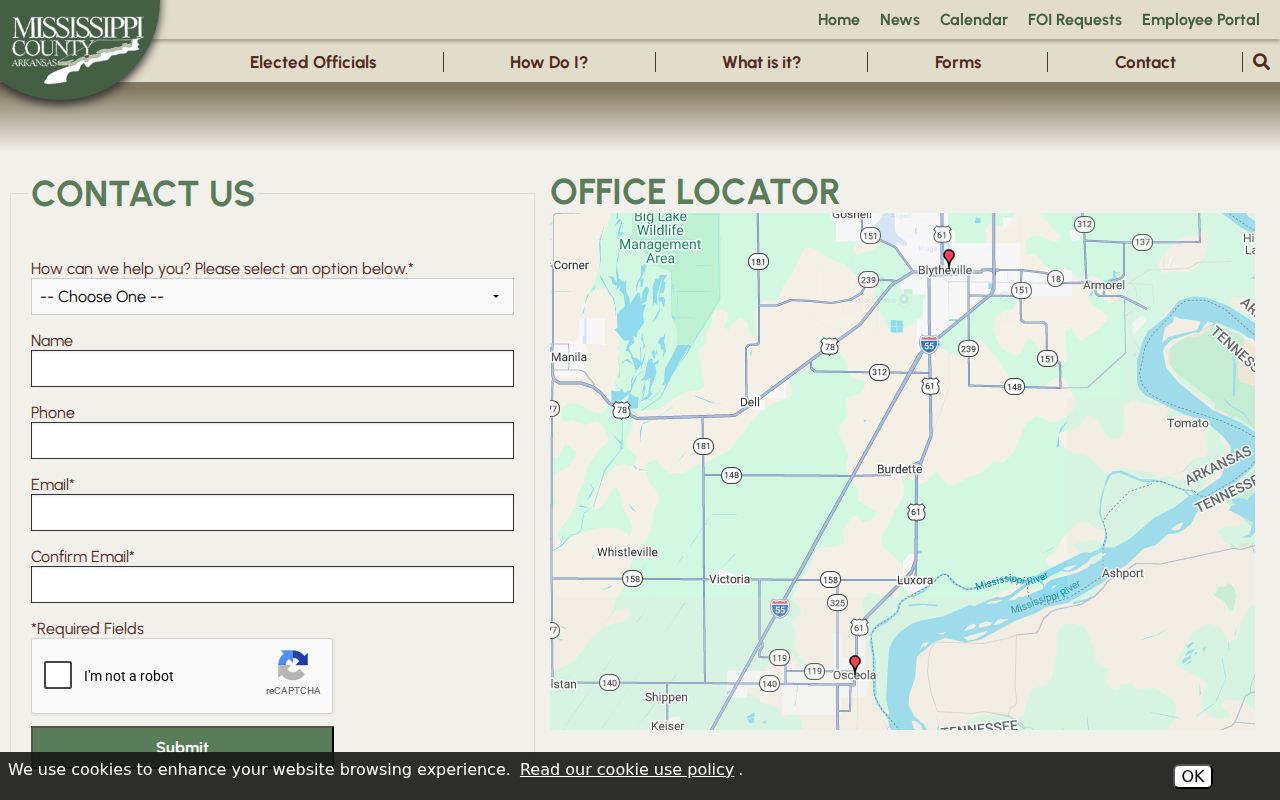
That county form is a fallback when the correct department is not yet clear.
Arkansas Public Access Laws
The Arkansas Freedom of Information Act generally opens public records unless an exemption applies. It does not make every criminal-history system an unrestricted name search. Separate statutes control state repository dissemination, non-criminal-justice checks, sealing, and registry publication. Local custodians may also redact protected facts or withhold an active investigative record when the law permits.
Key Arkansas laws:
Ark. Code Ann. 25-19-101 et seq. generally governs access to public records and supports county and sheriff FOIA requests.
Ark. Code Ann. 12-12-1001 et seq. defines and controls criminal-history information and its dissemination.
Ark. Code Ann. 12-12-1501 through 1513 governs non-criminal-justice background checks and consent-based access.
Ark. Code Ann. 16-90-1401 et seq. provides the Comprehensive Criminal Record Sealing Act process.
Ark. Code Ann. 12-12-901 through 920 governs sex-offender registration and public notice.
Ask the office that made or filed the record when a public copy has redactions or does not appear online.
Two Mississippi County Clerk Districts
The Circuit Clerk is clerk of the criminal and juvenile courts and prepares dockets and court-authorized process. The office has district contacts in Blytheville and Osceola, so the filing location matters. The Blytheville District can be reached at 870-762-2332, and the Osceola District at 870-563-6471. Both follow posted weekday hours of 9:00 a.m. to 4:30 p.m.
The Circuit Clerk page also states that filings and communications are not accepted by email.
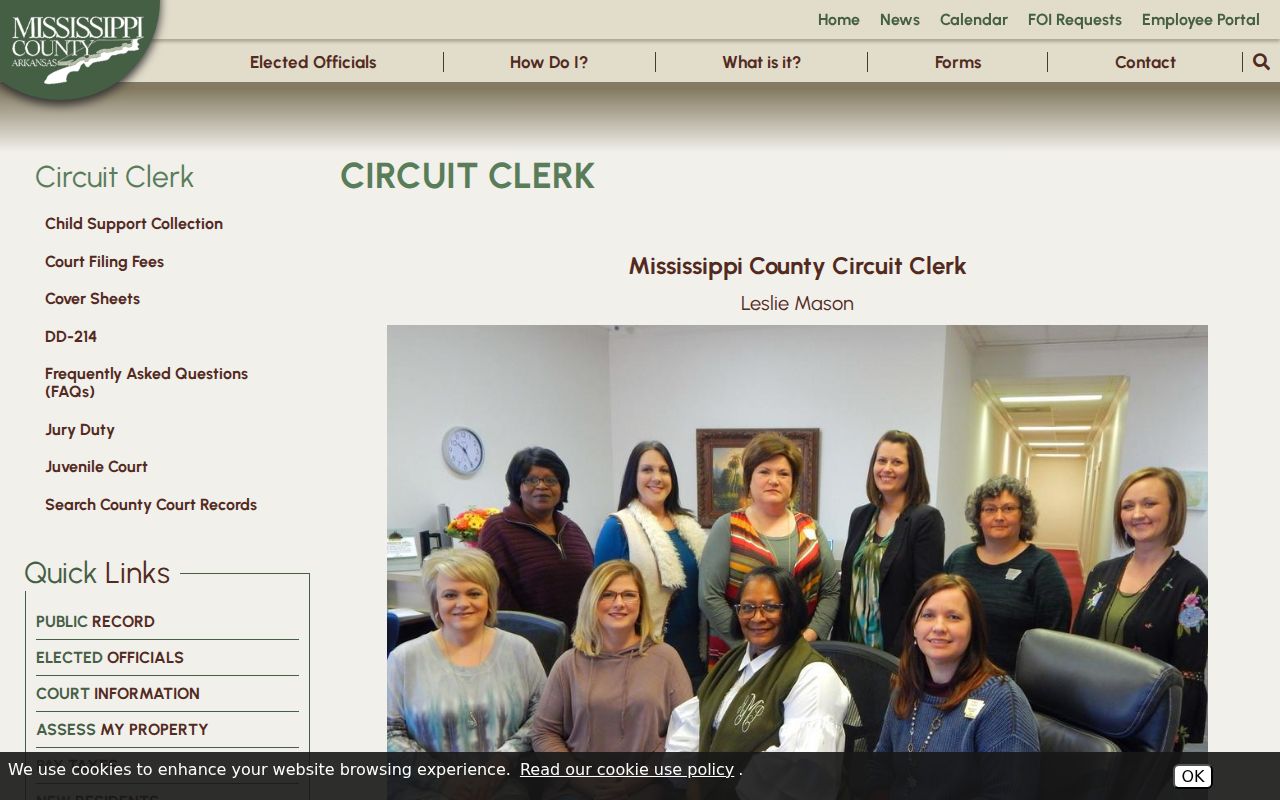
Call the proper district or use its mailing route instead of sending an email filing.
Blytheville District
P.O. Box 1498
Blytheville, AR 72316
870-762-2332
Osceola District
P.O. Box 466
Osceola, AR 72370
870-563-6471
Restricted, Sealed & Expunged Records
Arkansas now uses the terms sealing and petition or order to seal for many adult records. Start by identifying the case and the court that handled it. Eligibility depends on the outcome, offense, completion of the sentence, and current law. Mississippi County clerks cannot give legal advice and do not accept filings by email, so a person seeking relief must use the proper court procedure.
After a judge signs and files an order, the clerk sends it to ACIC. Arkansas Crime Information Center states that it has 30 days after receipt to complete the order to seal. Recheck the public court result and the state record after that update period. Juvenile files, victim or minor information, active investigations, and sealed records may remain outside ordinary public access for separate reasons.
- Sealing
- The current Arkansas process that removes a qualifying record from ordinary public view.
- Disposition
- The court outcome for a charge or case.
- Nolle prosequi
- A prosecutor's decision not to proceed with a charge.
- Capias
- A court order directing that a person be brought before the court.
State Versus Mississippi County Records
A $5 sheriff background check is described as in-house only. It covers records with that agency and should not be read as an Arkansas-wide history. The state CBC product has broader repository scope, but it requires account access, signed consent, and a fee. An FBI Identity History Summary is yet another product for a person reviewing their own national fingerprint-based history.
The official ASP-122 instructions provide the mail route for an Arkansas individual record check. The form route is useful when online account access is not available. For fingerprints, the sheriff lists a $15 Friday service during regular business hours, while Arkansas State Police uses its LiveScan and Harvester process for electronic submission. Local fingerprint service alone does not turn a county check into the state repository product.
A person reviewing their own record can also use the challenge language in the ASP-122 materials when information appears incomplete or wrong. First identify which office supplied the disputed item. A court disposition issue belongs with the filing court, while an identity or repository entry may require the Arkansas State Police correction process. Keep the case number, booking number, dates, and copies of the source records together. This prevents a request about one Mississippi County criminal case from being sent to an office that holds only another part of the history.
Mississippi County Registry and Supervision
Two state systems cover records that do not belong in the county court or jail search. The Arkansas DOC Inmate Search covers state prison custody. The Community Correction Absconder Search covers people officially listed as not reporting under supervision conditions and allows a Mississippi County filter. Local supervision questions go to the Division of Community Correction Osceola Office at 870-563-5366.
For registry information, use the Arkansas Sex Offender Notification System. The state search supports address, city, county, ZIP, place, name, and map routes for publishable offenders.
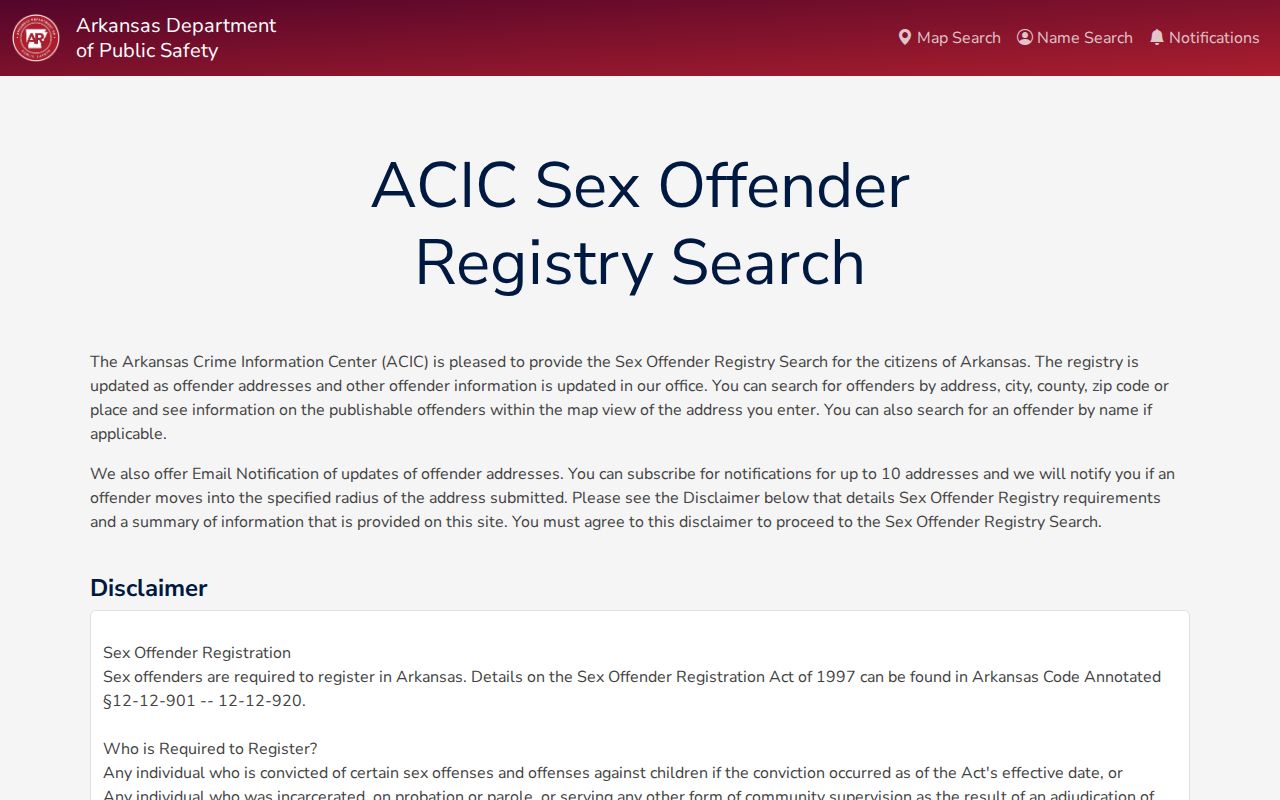
The sheriff warns that its local offender list is not complete and that address data may contain errors. Confirm through the state registry and local law enforcement, and use registry data only for lawful safety purposes.
City-by-City Criminal Records in Mississippi County
Blytheville, Osceola, and Manila each have a city police starting point. A city report stays with the police department that made it, while a county jail booking routes to the sheriff in Luxora and a filed case routes to the proper court. The three local guides keep that city-level detail separate from the broader Mississippi County system.
Blytheville Record Check
Police records, online reporting, district court, and the Blytheville clerk route.
Osceola Record Check
Police contact, district court jurisdiction, and the Osceola clerk district.
Manila Record Check
Direct police and court clerk phone routes, plus county booking checks.
Choose the city tied to the original report. Move to the sheriff roster only for county custody, then to Search ARCourts after a case is filed.